

When might spinal decompression be considered?
Following an appropriate assessment, spinal decompression may be discussed as a possible option for certain back or neck presentations:
- Persistent lower-back discomfort
- Disc-related back pain symptoms
- Sciatica-like symptoms travelling into the leg
- Buttock or leg pain, tingling or altered sensation
- Discomfort aggravated by prolonged sitting
- Restricted spinal movement and stiffness
- Recurring back symptoms
- Selected neck (cervical) presentations
Symptoms are not diagnoses — the same symptom can arise from different conditions, so assessment comes first.
How is suitability assessed?
Spinal decompression suitability cannot be confirmed from symptoms, an online questionnaire or a scan report alone. A spinal decompression consultation includes:
- Symptom history and behaviour
- Health and treatment history review
- Physical examination of movement and function
- Neurological screening where leg symptoms are present
- Review of existing imaging when relevant
- Clinical safety screening for contraindications
“Technology supports treatment delivery. Assessment determines whether using that technology is reasonable for the individual.”
CLINICAL INFORMATION — SPINE & STRENGTH CHIROPRACTIC, CRAIGIEBURN
What to expect during a session
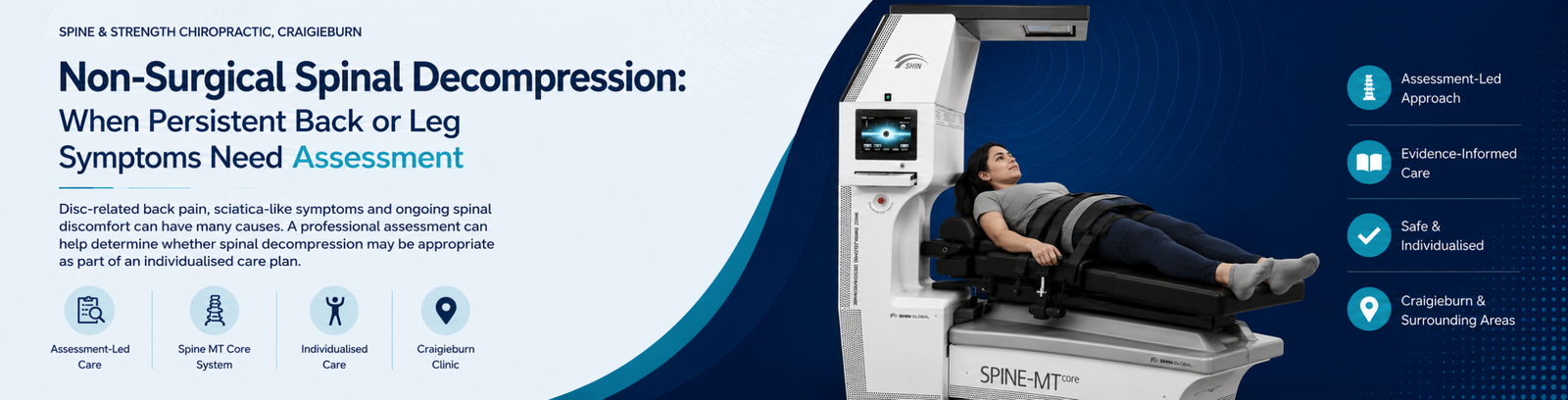
You are positioned and supported on the Spine MT Core spinal decompression table. Your chiropractor selects the settings for the treatment region, and the system applies programmed cycles of controlled distraction and relaxation. Table time is typically around 20–30 minutes, and you can communicate throughout — settings can be adjusted or the session stopped at any time
Part of a personalised care plan
Spinal decompression is one component of care, not a standalone cure. Depending on individual needs, a plan may combine education, activity guidance, chiropractic care, mobility and strengthening exercises, clinical rehabilitation, Pain Laser Therapy or referral where clinically appropriate. Progress is reviewed against function, activity tolerance and symptom behaviour.
Who may not be suitable?
- New loss of bladder or bowel control
- Numbness in the genital, groin or saddle region
- Rapidly worsening weakness or loss of movement
- Severe symptoms after an accident, fall or trauma
- Fever or recent serious infection with severe back pain
- Unexplained weight loss with persistent pain
- Severe, unrelenting pain at rest or at night
- Any symptoms suggesting a medical emergency
