

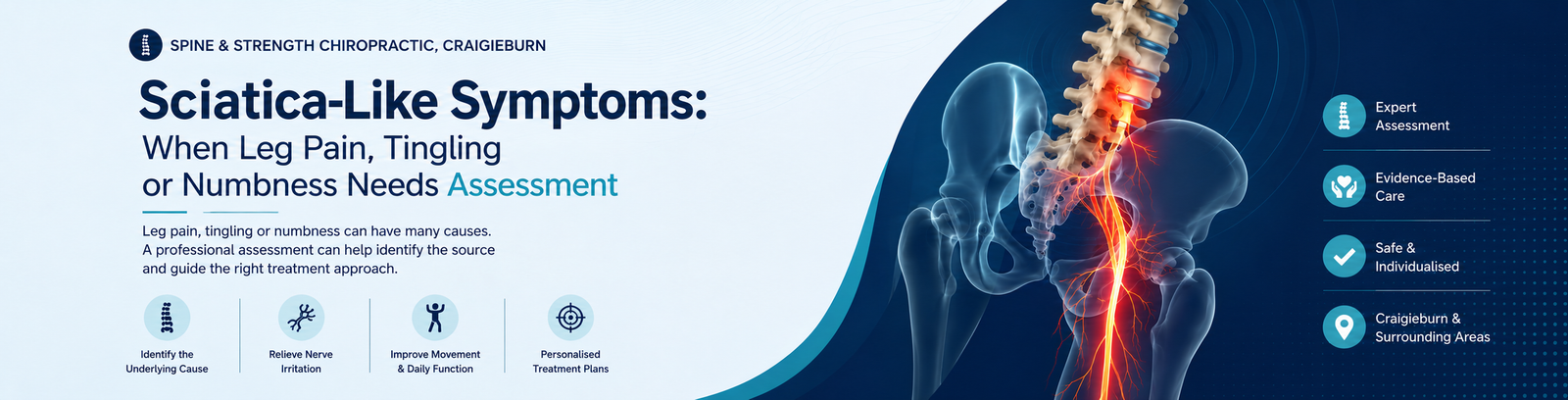
Understanding sciatica-like symptoms
Sciatica-like symptoms can occur when a nerve in the lower-back region is irritated or affected. The location, intensity and behaviour of the symptoms can vary considerably between individuals.
Symptoms that may require assessment include:
- Pain beginning in the lower back or buttock
- Pain travelling down the thigh or calf
- Burning, shooting or electric-like discomfort
- Symptoms that worsen while sitting
- Pain aggravated by bending or lifting
- Tingling or pins and needles in the leg
- Areas of reduced or altered sensation
- A heavy or unusually tired feeling in the leg
- Difficulty walking or standing comfortably
- A noticeable change in leg or foot strength
Sciatica may be associated with altered sensation such as pins and needles or numbness, but similar symptoms can also occur with other spinal, muscular, joint, neurological or medical conditions. The symptom pattern therefore needs to be considered alongside your health history and physical findings.
What happens during an assessment?
An assessment is intended to establish whether the symptoms appear to involve the lower back, a nerve pathway, another musculoskeletal structure or a problem requiring medical referral.
A chiropractic assessment may include:
- Discussing where the symptoms begin and travel
- Reviewing when and how the symptoms started
- Identifying movements that worsen or ease them
- Reviewing previous injuries and health conditions
- Examining lower-back and hip movement
- Reviewing existing scans or medical reports
- Checking sensation in different areas of the leg
- Assessing relevant muscle strength
- Checking reflexes where appropriate
- Observing walking and functional movement
- Screening for medical warning signs
- Discussing suitable next steps or referral
Imaging is not automatically required for every person experiencing back and leg symptoms. The RACGP advises that imaging is generally considered when there is clinical concern about a serious underlying condition, or in selected cases where severe radicular symptoms are not improving and further intervention is being considered.
The assessment findings should be clearly explained before any care is recommended. Depending on the presentation, the next step may involve conservative care, monitoring, rehabilitation, communication with a GP or referral for further investigation.
“Leg pain, tingling or numbness should not automatically be labelled as sciatica. A careful assessment helps determine whether a nerve may be involved and what the appropriate next step should be.”
CLINICAL INFORMATION — SPINE & STRENGTH CHIROPRACTIC, CRAIGIEBURN
What care options may be discussed?
Recommendations will depend on the assessment findings, the severity of the symptoms and the individual’s general health.
Where clinically appropriate, a personalised care plan may discuss:
- Advice about movement and daily activities
- Chiropractic care or gentle mobilisation
- Mobility and rehabilitation exercises
- Progressive strengthening
- Strategies for sitting, driving or lifting
- Gradual return to work or exercise
- Monitoring of sensation and strength
- Referral to another healthcare professional
For selected patients, non-surgical spinal decompression may also be discussed after suitability screening. Pain Laser Therapy may be considered as a supportive option in some care plans. Neither service is appropriate for every person, and no particular response can be guaranteed.
When should you arrange an assessment?
Consider arranging a professional assessment when:
- Leg symptoms are not gradually improving
- Pain repeatedly returns
- Tingling or numbness persists
- Symptoms interfere with sleep
- Sitting or driving increases the discomfort
- Walking or standing has become difficult
- Pain limits work, exercise or household activities
- Symptoms extend below the knee or into the foot
- One leg feels different from the other
- You are uncertain whether the symptoms require medical care
Changes in strength, sensation and reflexes can be associated with nerve compression and deserve careful assessment, particularly when they are new, persistent or worsening.
When do leg symptoms require urgent medical attention?
Book a non-urgent assessment when you experience:
- Recurring pain from the back or buttock into the leg
- Persistent tingling or pins and needles
- Mild numbness that is not resolving
- Pain aggravated by sitting, bending or lifting
- Difficulty returning to normal exercise or work
- Symptoms that affect sleep or daily movement
- Ongoing discomfort despite basic self-management
- Concerns about possible nerve involvement
Seek urgent medical care if you experience:
- New loss of bladder or bowel control
- Numbness around the groin, genitals or saddle region
- Loss of feeling or movement in a leg
- Rapidly increasing or significant muscle weakness
- Symptoms affecting both legs and worsening quickly
- Severe symptoms following a fall, collision or other trauma
- Back and leg pain accompanied by fever
- Severe, unexplained or continuously worsening symptoms
